SIN Customs Artist - Ryan Curtis
The Story Behind SIN Customs
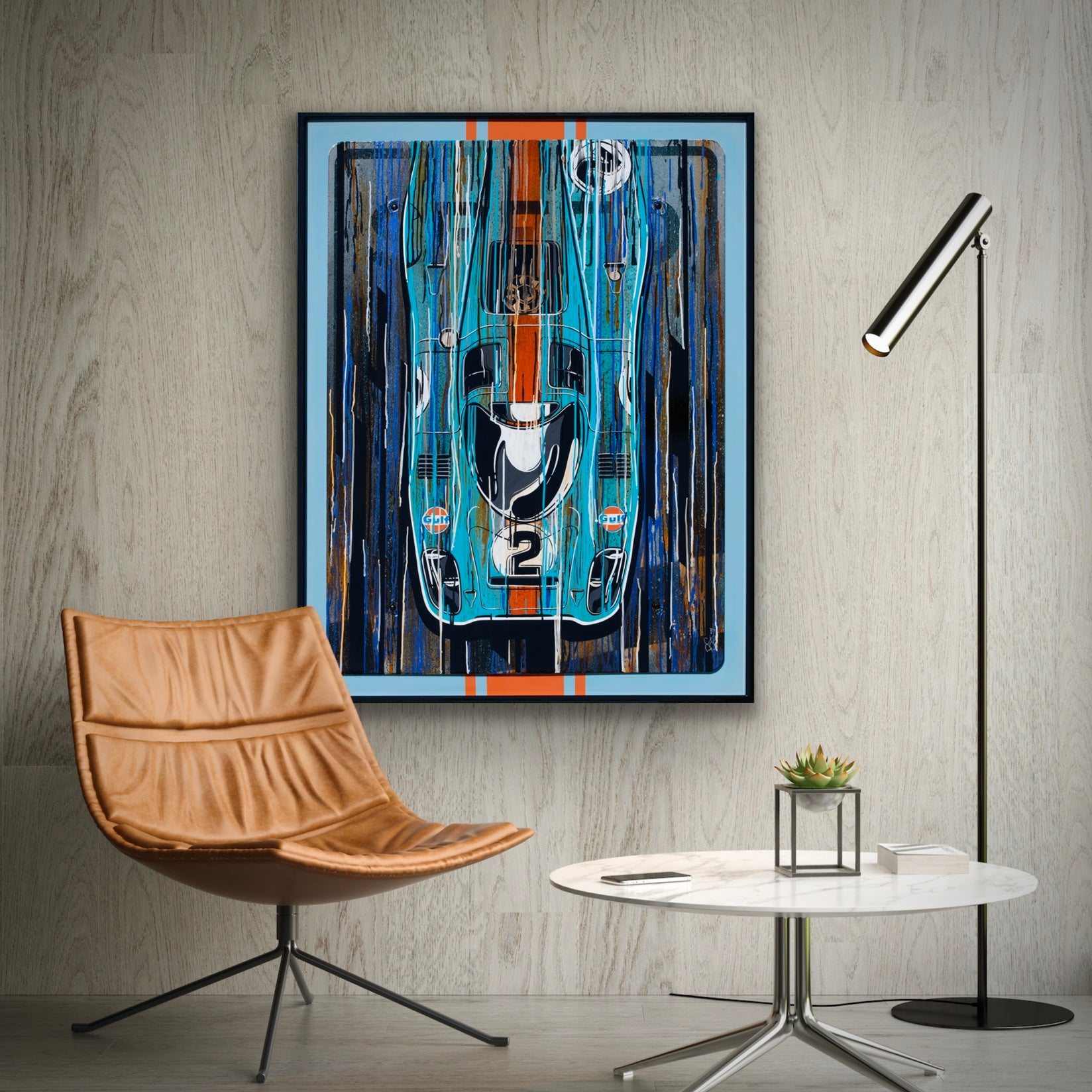
The Fine Art of the Road Sign
The cars we remember become the stories we tell.
I've always believed cars are more than just machines. They're expressions of individuality, freedom, creativity, and passion. They become part of our lives, connecting us to the people, places, and moments that shape who we are.
For me, that connection began long before I ever owned a car.
A Passion That Started with Imagination
I didn't grow up in a family of gearheads. My love for cars was something I discovered on my own.
Some of my earliest memories are of Hot Wheels, model cars, LEGOs, and drawing anything with four wheels. I was fascinated by everything from the exotic lines of a Ferrari Testarossa or Lamborghini Countach to the power of American muscle cars and the engineering and racing heritage of Porsche.
But I didn't just admire cars for what they were. I was always imagining what they could become.
In junior high, I saw my first custom mini-truck. Its low stance and clean styling opened my eyes to an entirely different automotive world—one built around creativity, individuality, and turning imagination into reality.
I knew I wanted to be part of it.
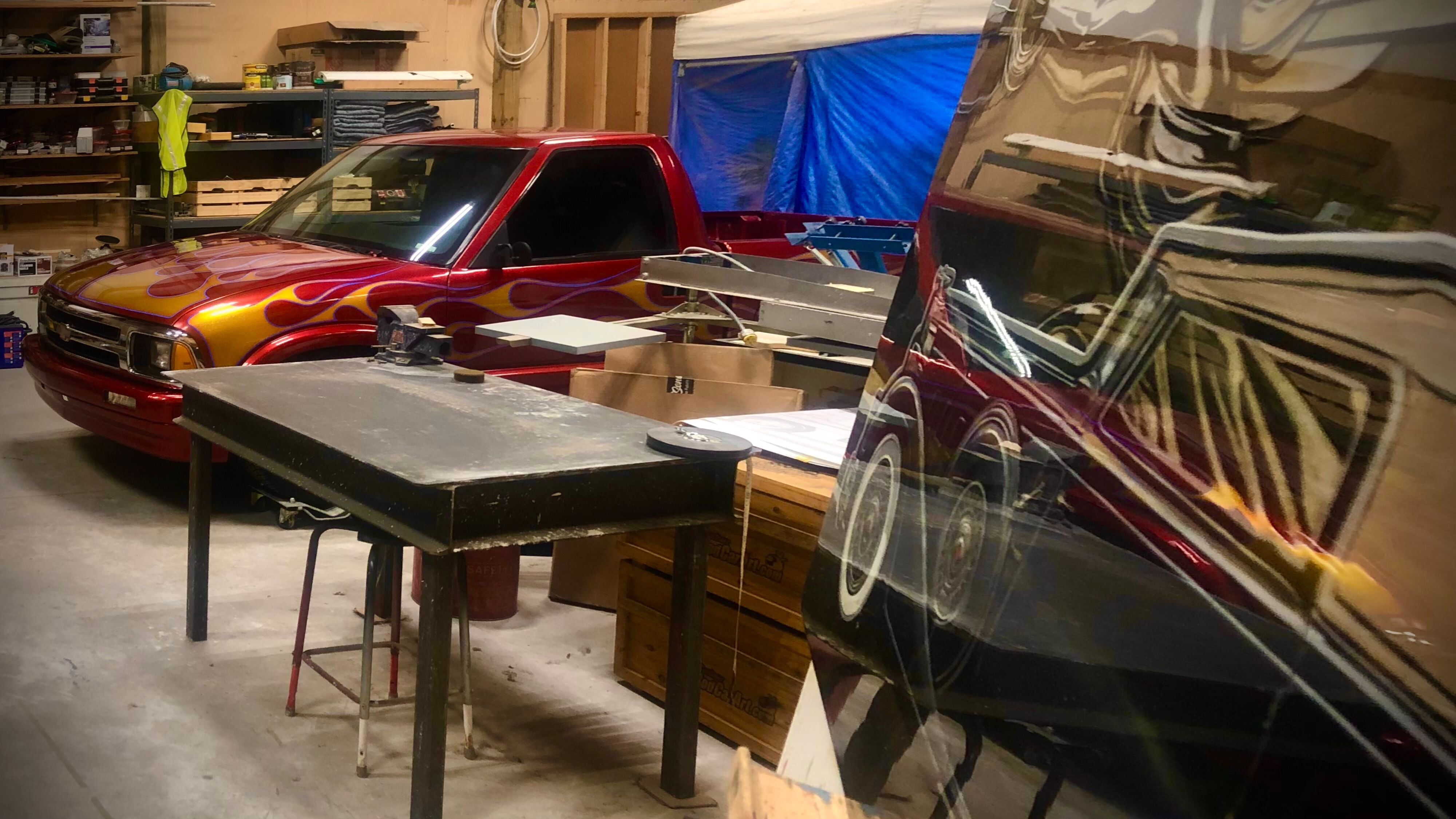
In 1997, I bought a 1995 Chevy S10, a truck I still own today. It became my creative outlet, my classroom, and a reflection of my evolving artistic vision. I learned to pinstripe on it, modified it, and painted it with hot rod-inspired flames in full metalflake and candy colors.
That truck taught me perseverance, patience, and the satisfaction of bringing an idea to life. It also connected me with the automotive community and a lifestyle that continues to shape who I am.
Rediscovering the Freedom to Create
After high school, I pursued graphic design and spent nearly 20 years working in marketing and advertising.
Although I had built a career in a creative industry, I eventually found myself in a corporate environment where creativity had become routine. I was spending my days moving things around on a screen, working within boundaries that left little room for imagination.
I missed creating simply for the love of it.
So I started drawing cars again.
At first, they were illustrations of my own vehicles. Then came friends' cars, followed by commissions from other enthusiasts.
It felt like finding the missing piece of a puzzle. My passion for cars and my love for art finally came together.
With the support of my wife, I made the difficult decision to leave the security of my corporate career and pursue automotive art professionally.
There were no guarantees, and there still aren't. But I had rediscovered something I wasn't willing to lose again—the freedom to create.
Style. Innovation. Nostalgia. (SIN)
When I began developing SIN Customs, I wanted my artwork to be as distinctive as the vehicles that inspired it.
Having previously worked for a company that manufactured road signs, I saw an opportunity to turn something ordinary into an unconventional canvas.
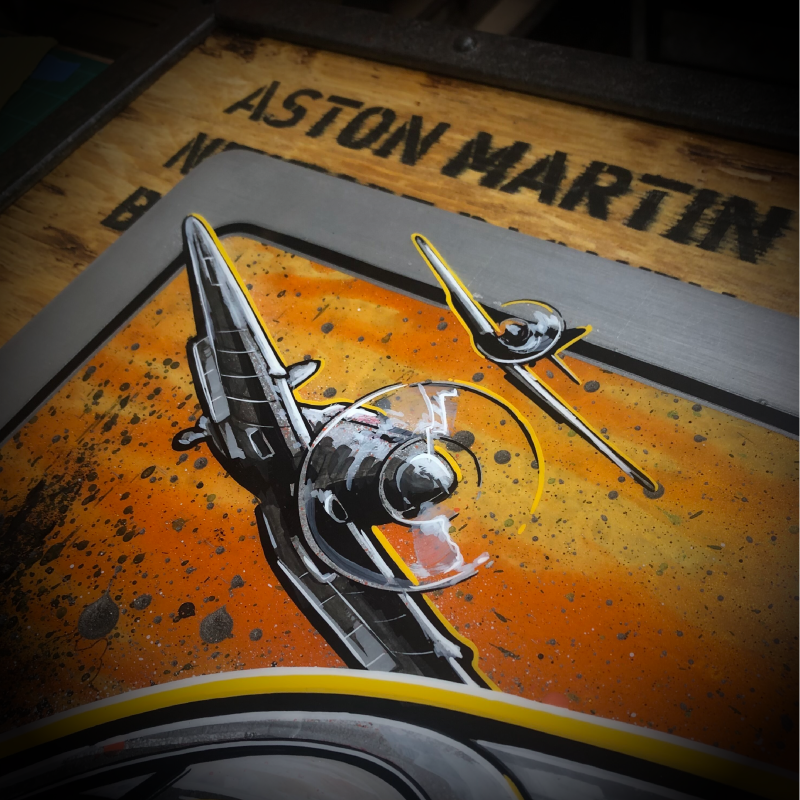
I began painting on aluminum road signs using automotive urethane paints—the same types of materials associated with the cars themselves.
It was a natural connection between my artistic background and the automotive culture I loved.
The Fine Art of the Road Sign was born.
Over the years, my artistic style has evolved. I've become less concerned with reproducing every detail perfectly and more interested in capturing the character, movement, and emotion of a vehicle.
I embrace loose brushstrokes, drips, splatters, and the unexpected ways paint moves across a surface.
When I'm completely immersed in a painting, everything else disappears. The brush seems to know where it needs to go, and the painting begins telling me what it needs.
It's that creative freedom that gives each original its own character.
I'm not simply trying to capture what a car looks like. I'm trying to capture what makes it come alive.
Your Story. My Passion. One Piece of Art.
After nearly 30 years with my S10, I understand that a car can represent an entire chapter of someone's life.
It might remind you of your first car, a friendship, a dream you worked years to achieve, or someone you wish you could share one more drive with.
I've witnessed that connection through my artwork, including seeing a collector brought to tears because a painting reminded them of a friend they had lost.
That's why, when someone tells me about their car, I'm interested in more than its year, make, or model.
I want to hear their story. What makes that car special? What brings them joy? What do they feel when they're behind the wheel?
Every painting I create carries part of my own story—my experiences, my artistic vision, and my lifelong passion for cars.
But the collector brings another story to it.
Sometimes that story is expressed through a personal commission. Other times, someone discovers an existing painting that connects with a memory, an accomplishment, or a passion of their own.
When those stories come together, the artwork becomes something more than an image of a car.
It becomes personal.
When Passion Meets the Soul
For me, success is about having the freedom to follow my dreams, live life with passion, and share that passion with others.
I love being involved in the entire creative process, from the first concept to the finished painting and even producing my own prints.
And I love seeing where that artwork goes afterward—the garages, homes, offices, and collections where it becomes part of someone else's life.
The painting may leave my studio, but its story continues with the collector.
My hope is that when someone looks at a piece of my work, they don't just see a beautiful machine. They feel the passion that went into creating it and recognize something meaningful from their own life.
Because ultimately, that's what I want my art to capture.
The moment when passion meets the soul.
Ryan Curtis
Artist & Founder, SIN Customs
HotRodCarArt.com
An Artist Profile: Ryan Curtis of SIN Customs
The Fine Art of the Road Sign
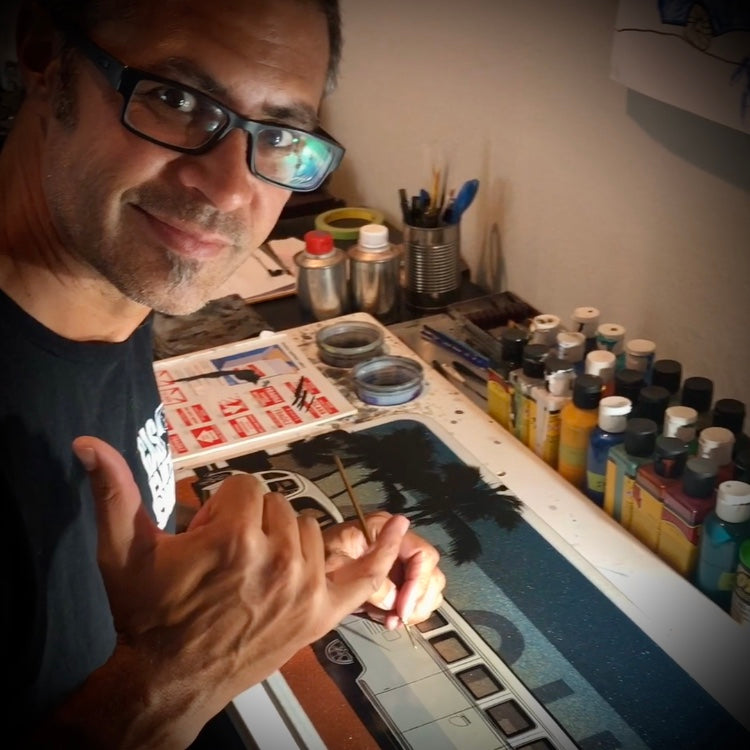
There’s a certain kind of artist who doesn’t just depict automotive culture—they live inside it. For Ryan Curtis, the artist behind SIN Customs, that connection didn’t come later in life. It was always there.
Long before the studio, before the brand, before the collectors, there were Hot Wheels cars scattered across the floor—traded in place of bats and balls—and sketchbooks filled with lines that hinted at something more. Cars weren’t just objects of fascination; they were subjects, forms, and eventually, a lifelong pursuit of translating motion and machine into art.
“I was always drawing, always building something,” Ryan recalls. “If I wasn’t working on a car, I was creating one out of whatever I could find.”
That instinct—to build, to create, to reimagine—never left.
From Design to Disruption
Before SIN Customs became what it is today, it existed in a different form. automotiveSIN Magazine began as an outlet—an attempt to carve out creative freedom while working within the constraints of a career in graphic design and corporate marketing.
For nearly two decades, Ryan worked in the advertising industry, refining his eye, sharpening his sense of composition, and developing the discipline required to execute at a high level. But over time, something shifted. By 2012, the creative well had started to run dry. “I was burned out. I wasn’t creating—I was producing,” he says. “There’s a difference.”
That realization became the turning point. Ryan made the decision to step away from the safety of corporate structure and return to something far less predictable: art. But not just any art—this time, it would be built entirely around what inspired him most.
The Automobile.
It was also a decision that didn’t happen in isolation. Behind the scenes, Amanda Curtis stood alongside him—recognizing his creative light beginning to dim and knowing something had to change. She supported the shift away from stability and into something uncertain, but far more aligned with purpose.
Reinventing the Canvas
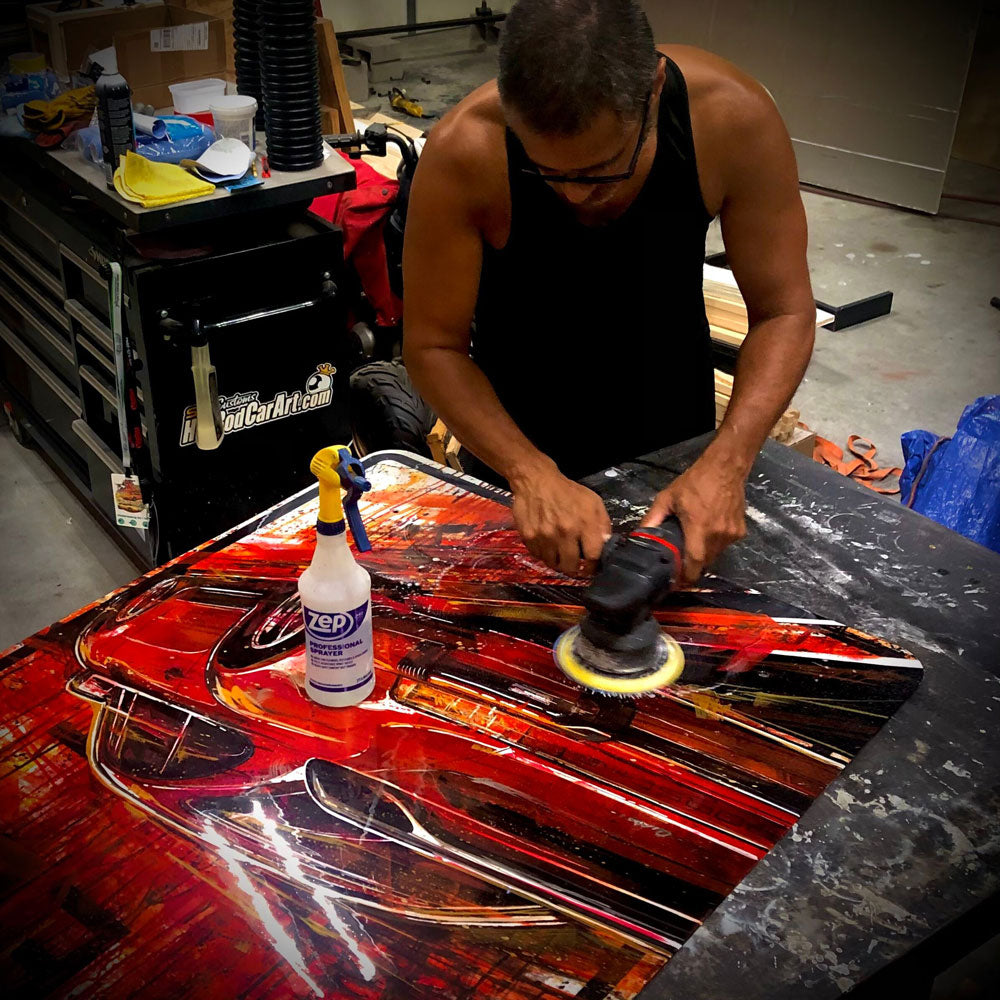
If the subject was clear, the medium required rethinking. Ryan wasn’t interested in traditional approaches. Canvas felt expected. Oil and acrylic, too familiar. If the work was going to carry authenticity, the materials needed to reflect the subject. “If I’m painting cars,” he explains, “they should be painted with automotive paint.” That decision led to one of the most defining elements of SIN Customs: road signs as canvas, finished with automotive urethanes—the same materials used on high-end builds and restorations. It wasn’t an obvious path. In fact, it required learning an entirely new discipline of paint.
Early works were graphic, controlled, and exploratory. But over time, as Ryan began to understand the behavior of automotive coatings—the way they layered, reacted, and moved—something shifted. The medium began to open up. “I started treating it more like watercolor,” he says. “That’s when everything changed.”
What followed was the development of a signature technique—one that bridges the precision of illustration with the depth and unpredictability of fine art. The result is work that doesn’t feel like sign painting or custom kulture, but something altogether different: refined, intentional, and built for the collector.
The Discipline Behind the Art
Like many artists, Ryan is quick to point out that the work itself is only part of the equation. “The hardest part hasn’t been the art,” he admits. “It’s been the business—and staying disciplined when things aren’t working the way you think they should.” There have been moments of uncertainty. Periods where growth stalled. Times when the balance between creating and building the business felt impossible to maintain.
“It’s like a painting,” he explains. “Every piece has an ugly phase. You just have to push through it. If you stop there, you never see what it becomes.” That mindset—trusting the process, both in the studio and in the business—has become foundational to the brand.
But growth, Ryan realized, couldn’t happen alone. Bringing his wife, Amanda Curtis, into the business was not just a supportive move—it was a strategic one. Where Ryan is naturally focused and reserved, Amanda brings an outgoing, highly social presence that complements the brand in a different way. Her background in the medical field, combined with experience in organization and office administration, adds structure and professionalism to the operation—areas critical for scaling beyond a one-man studio. More importantly, her investment runs deeper than a role or title. “She’s been there since the beginning,” Ryan says. “She’s always had my back.” Today, Amanda oversees scheduling, events, and client relations—serving as the front-facing connection between SIN Customs and its growing collector base. The shift has allowed Ryan to return to the studio with greater focus, while the business side continues to strengthen.
“It’s made a huge difference,” he adds. “Now I can spend more time where I’m supposed to be—inside the work.”
Building Beyond the Studio
Today, SIN Customs sits at an inflection point. The foundation is established, but the trajectory is clearly upward. Ryan is actively working to expand into new markets—spaces where automotive art is not only appreciated, but elevated. That includes galleries, museums, and collaborations with luxury automotive brands, as well as participation in high-end events where art and automotive culture intersect at the highest level.
With Amanda helping lead client relationships and event coordination, the brand has been able to engage more directly and consistently with collectors, curators, and partners—an essential step in moving into higher-end spaces. “I see this on a global stage,” Ryan says. “Not just in the automotive world, but beyond it.”
There are broader ambitions in motion—new brands, new directions, and an expanding team that will support the growth of SIN Customs as it evolves into something larger than a single artist operation.
A Life Built Around the Work
Outside the studio, not much changes—because the line between work and life is intentionally blurred.
Ryan lives in rural Arkansas with his wife Amanda, where their home and studio exist side by side in a shop-house built for exactly this purpose. Step out the back door, and the workspace begins. It’s a setting that reflects the brand itself: grounded, hands-on, and built with intention.
When he’s not painting, he’s still immersed in automotive culture—working on his own vehicles, attending shows, and staying connected to the community that continues to fuel the work. It’s a shared lifestyle, one that both he and Amanda are deeply invested in as they continue to build the brand together.
Looking ahead, plans are already underway to build a 5,000-square-foot gallery, studio, and event venue—on the property which will be a physical extension of the SIN Customs vision, designed not just as a workspace, but as a destination.
The Road Forward
If there’s a defining characteristic to Curtis’s work, it’s that nothing about it feels accidental. The materials, the subject, the process—it’s all aligned. What began as a return to creativity has grown into something far more substantial: a brand, a body of work, and a trajectory that positions SIN Customs within a new generation of automotive artists pushing beyond traditional boundaries.
And now, with a strong foundation not just in the work—but in the partnership behind it—SIN Customs is building toward something larger. Because in the end, this isn’t just about painting cars. It’s about building something that lasts—on steel, in story, and in the collections of those who understand the difference.